
The Definitive Case for Standards-Based Grading in K–12 Education
Picture two seventh graders. Same school. Same math class. One earns an 88 — a solid B. The other gets a 79 — a C+. But flip open their assessments and the picture reverses entirely.
The first student aced the extra credit and never missed a day. The second truly mastered every algebraic concept but lost points for a few late homework assignments.
This isn’t a hypothetical. It is the core reason the conversation around standards-based grading deserves far more serious attention than the culture-war noise that sometimes surrounds it.
“A grade should tell you what a student knows and can do — not how compliant, punctual, or charming they were.”What Is Standards-Based Grading?
Standards-based grading (SBG) is an assessment philosophy in which student performance is measured against clearly defined, publicly known learning targets — called standards — rather than averaged across a mix of behaviors, effort, and academic work as is typical in traditional grading.
In a traditional system, your final grade is a blended score: test results, homework completion, participation points, maybe extra credit for bringing in canned goods. Standards-based grading separates those components and asks one fundamental question at a time: “Can this student do this specific thing?”
Instead of a vague “B+ in 4th Grade Math,” parents and students see a transparent, actionable report:
• Understands place value: Proficient
• Multiplies multi-digit numbers: Approaching Proficiency
• Interprets data in graphs: Advanced
That’s honest. That’s useful. And that’s what grading was always supposed to do.
SBG vs. Traditional Grading at a Glance
Do We Need Standards at All?
This question is not rhetorical. It has been documented in faculty meetings, school board sessions, and legislative hearings where smart, well-meaning educators argued that standards are bureaucratic overreach — that excellent teachers don’t need a list telling them what to teach.
They’re not entirely wrong. The best teachers always had an intuitive command of what students at each developmental stage need. But here’s the problem: intuition doesn’t scale, and it doesn’t travel.
The Mobility Problem
Approximately 6.4 million American students change schools each year — many multiple times. Without shared standards, a student moving from Dallas to Denver in October enters a new classroom that may be two units ahead or two units behind. With standards, any competent teacher can look at that student’s record and know precisely where to place them.
The Equity Problem
Without explicit standards, whose definition of “rigorous” wins? Historically, the answer has been: the one held by whichever wealthy, well-resourced community employs the most experienced teachers. Standards create a floor — a minimum guarantee of intellectual engagement — for every student, regardless of zip code.
The Accountability Problem
How do you know a school is succeeding if you haven’t agreed on what success looks like? Standards create the shared language that makes meaningful evaluation possible — for teachers, administrators, parents, and policymakers alike.
Common Core vs. School-Specific Standards: A Genuine Debate
The Case for Common Core: The Foundation
• Creates consistent expectations across 47+ states
• In our mobile society, a student moving state shouldn’t fall a year behind because the curriculum didn’t align
• Focuses on critical thinking, evidence-based claims, and the analytical skills demanded by a modern economy
• Enables apples-to-apples national data on student achievement and college readiness
• Bench marked against international standards (PISA, TIMSS)
The Case for School-Specific Standards: The Ceiling
• Reflects local community values, context, and aspirations
• Allows faster iteration based on actual student outcomes
• A tech-heavy community might add “AI Literacy” or “Digital Citizenship” standards beyond state requirements
• Magnet schools and vocational academies need standards tailored to their mission — be it performing arts or aeronautics
• Teachers feel greater ownership and buy-in when they shape the standards they teach
The Real Tension
Common Core’s opponents often conflict two separate things: the standards themselves (what students should know) with the curriculum and testing used to measure them (how we check). The standards document itself is, frankly, quite reasonable. The problems arose in implementation — high-stakes testing regimes, rigid pacing guides, and the perception of federal overreach.
School-specific standards, meanwhile, work beautifully in high-performing, stable schools with veteran staff and engaged communities. They struggle everywhere else. When a school loses 40%of its teaching staff in a year — not uncommon in high-poverty districts —locally crafted standards become institutional knowledge that walks out the door.
“The question was never whether to have standards. It was always: whose standards, at what grain size, enforced how, and by whom?”A Practical Synthesis
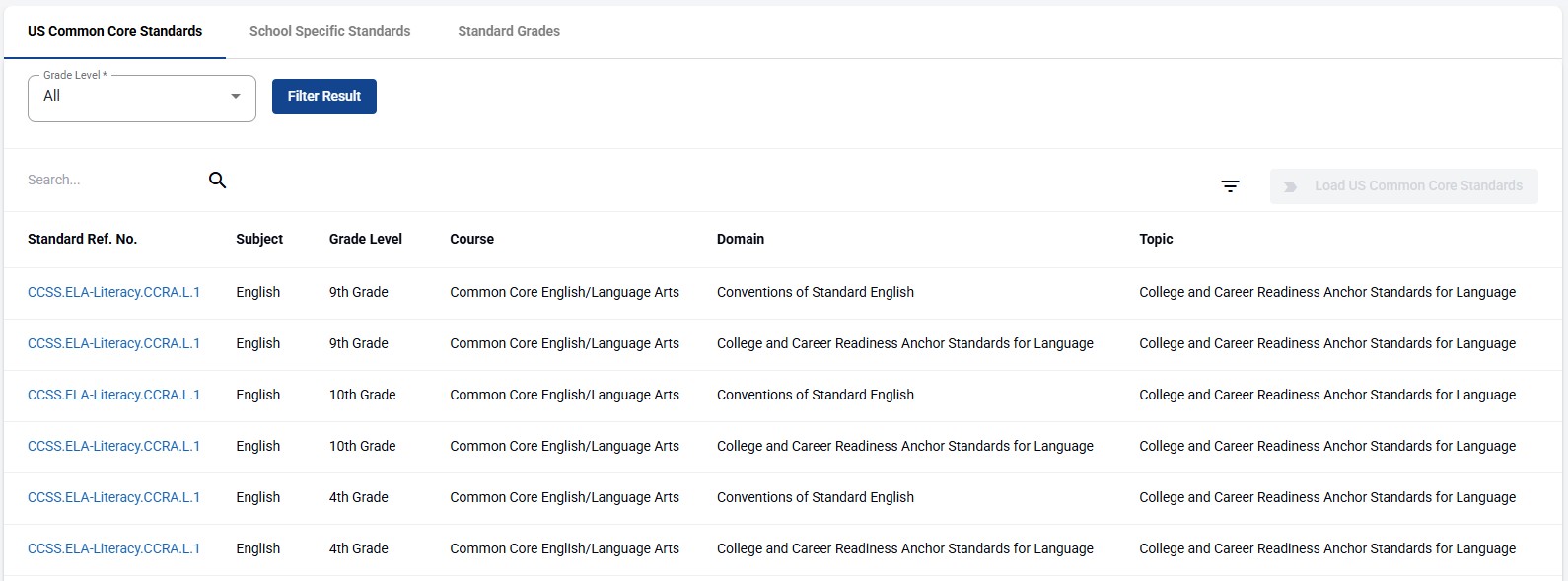
The most effective model I’ve seen in practice: adopt state or national standards as a shared foundation, then layer school-specific standards on top for local relevance and enrichment. Think of it as load-bearing walls (Common Core) with custom interior design(school-specific extensions). You don’t remove the structure; you build within it.
How Standards-Based Grading Works in Practice
Implementing SBG isn’t just a philosophical shift — it’s a logistical one. Here is what it actually looks like in a real school:
Step 1: Define and Unpack Standards
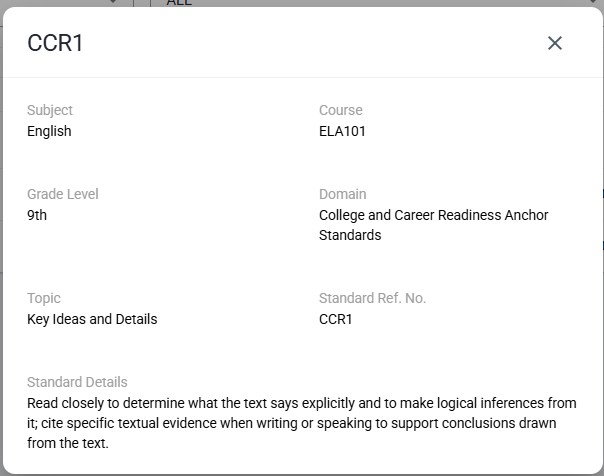
Teachers work collaboratively to break broad standards into specific, observable, teachable learning targets. “Students will understand fractions” becomes five discrete targets, each independently assessable. Align with both Common Core and your institution’s goals from the start.
Step 2: Design Assessments Backward
Before teaching a unit, teams ask: what evidence would convince us that a student has mastered this standard? Only then is instruction designed. This is the heart of Understanding by Design (UbD), and SBG makes it operational rather than aspirational.
Step 3: Grade Against Proficiency Scales
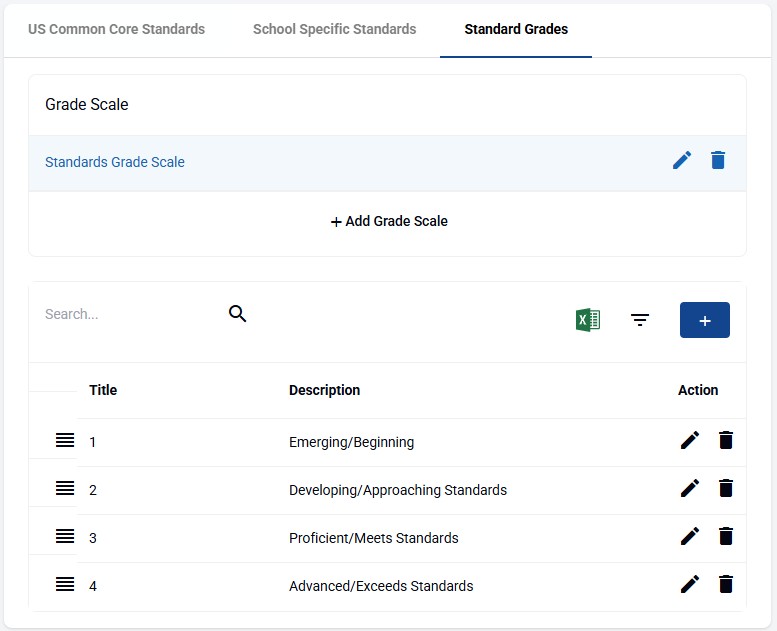
Rather than percentages, SBG uses scales — typically 1–4 — that describe what mastery looks like at each level. A“4” isn’t 100%; it’s evidence of extended thinking, applying knowledge in novel contexts. A “3” is solid grade-level proficiency. A “2” is approaching it. A“1” means foundational gaps remain.
Step 4: Allow Reassessment
Students may reassess standards they haven’t yet mastered. The philosophy is explicit: we are measuring what students know at the point of completion, not how quickly they learned it. A student who scores a 1 in October and a 4 in December learned the material. That is the point.
Step 5: Separate Academic from Behavioral Grades
Effort, participation, and homework completion are reported separately — often as “learning habits” — rather than averaged into the academic score. This eliminates the scenario that opened this article: the student who earns a B by being compliant rather than competent.
Benefits of Standards-Based Grading
When implemented effectively, SBG delivers across the full school community:
• Students clearly understand what mastery looks like and where they stand
• Teachers provide more targeted, actionable feedback
• Parents receive transparent, meaningful reports instead of opaque letter grades
• Early identification of learning gaps enables timely interventions
• Grading aligns with actual learning outcomes rather than compliance behaviors
• Equity improves students who are measured by what they know, not their circumstances
Common Challenges — and How to Solve Them
Despite its proven benefits, many schools struggle with the transition. The three most common obstacles are:
1. Teacher and Parent Resistance
SBG looks and feels different from what most adults experienced in school. The solution is sustained professional development for teachers and clear, patient communication campaigns for families — framing the shift from grades to learning, not from rigor to leniency.
2. Grade book Software Limitations
Most legacy student information systems were built for letter grades and GPA calculations. They are not designed for standards-based mastery tracking, cohort-level insights, or flexible reassessment workflows. Schools moving to SBG need platforms purpose-built for it.
3. Converting Scores for External Reporting
Colleges still largely want traditional letter grades. Most SBG schools either convert proficiency scores to letter grades for official transcripts or include a supplementary narrative transcript. Some forward-thinking admissions offices now actively prefer standards-based records for the additional diagnostic detail they provide.
Frequently Asked Questions
Is standards-based grading better than traditional grading?
For measuring actual learning, yes. SBG provides clearer insights into student mastery, surfaces learning gaps earlier, and promotes equity by removing non-academic factors from academic grades. Research from numerous school-level case studies consistently supports well-implemented SBG.
Is Common Core the same as standards-based grading?
No. Common Core State Standards define what students should learn in ELA and Math. Standards-based grading is a philosophy of how to assess and report student mastery of those standards. A school could use Common Core, state-specific standards, or its own custom standards within an SBG framework. They are complementary but entirely separate concepts.
Do US schools have to follow Common Core?
No, but many use it as a foundational framework. State adoption is voluntary, and several states have withdrawn or modified their adoption over the years. The practical reality is that most college readiness benchmarks and national assessments remain aligned to CCSS-level expectations.
How do colleges handle standards-based transcripts?
This is actively evolving. Most colleges still want traditional grades for GPA calculations, and SBG schools typically convert or supplement accordingly. Some forward-thinking admissions offices now prefer standards-based records for the richer diagnostic detail they provide about applicants.
Ready to Implement Standards-Based Grading the Right Way?
If your institution is moving toward standards-based grading, the right system makes all the difference.
A modern SIS should not just store grades—it should:
- Track mastery at the standard level
- Support reassessments and growth
- Provide actionable insights for educators
Discover how openSIS K-12 Web-Based Student Information System helps schools transition to smarter, standards-aligned learning systems.
See how openSIS captures standards data and allows educators to use it for grading.
Interested in learning about Effort Grades?
Read this blog post: Importance-of-effort-based-grading